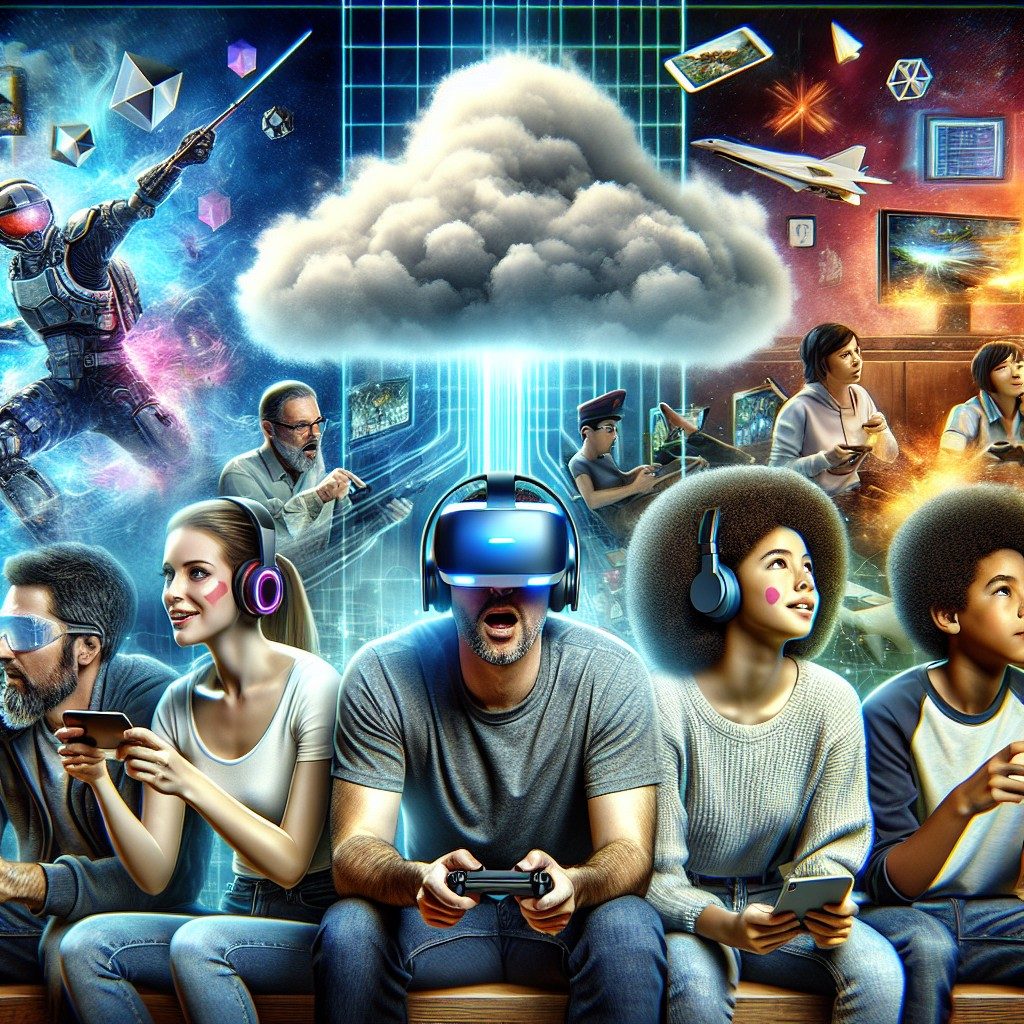
Cloud gaming has rapidly evolved over the past few years, promising the ability to play high-quality games anywhere without the need for powerful hardware. Despite its potential, one persistent issue has been the smoothness of gameplay, often marred by latency, buffering, and visual degradation. Recent technological upgrades, however, are beginning to resolve these challenges, allowing cloud gaming to deliver a near-console experience through streaming.
Improved Network Infrastructure Reduces Latency
One of the main factors affecting the smoothness of cloud gaming streaming is network latency. Advances in internet infrastructure, including the expansion of fiber-optic networks and the rollout of 5G mobile connectivity, have significantly lowered latency rates. This upgrade ensures that data travels faster between the user and remote servers, minimizing delays that can disrupt gameplay. As a result, players experience more responsive controls and fewer interruptions during their sessions.
Edge Computing Brings Servers Closer to Players
The deployment of edge computing has been a game-changer for cloud gaming platforms. By positioning servers closer to players’ physical locations, edge computing reduces the distance that data must travel. This proximity lowers latency and improves streaming quality, which in turn contributes to smoother gameplay. Many major cloud gaming services are now investing in edge computing to enhance user experience and reduce lag.
Enhanced Video Compression Techniques Optimize Streaming Quality
Streaming games requires transmitting large amounts of data quickly and efficiently. Upgrades in video compression algorithms have played a pivotal role in making cloud gaming feel smoother. More efficient compression reduces the bandwidth required without sacrificing visual quality, even on variable network conditions. This optimization results in clearer images and fewer instances of pixelation or buffering during gameplay.
Adaptive Streaming Technology Enables Seamless Performance
Adaptive streaming dynamically adjusts the quality of the game stream based on the player’s current network conditions. If bandwidth fluctuates, the system automatically modifies resolution or frame rates to maintain uninterrupted gameplay. This technological upgrade prevents sudden drops in performance or long loading times, making the streaming experience more reliable and smooth across different devices and connection speeds.
Expansion of Global Data Centers Supports Scalability
Cloud gaming services have been expanding their global data center networks to accommodate a growing player base and deliver content more efficiently. Increased server availability helps distribute load evenly and mitigates bottlenecks that previously caused lag or downtime. The broader geographic coverage offered by these data centers reduces congestion and enhances responsiveness, contributing to a more consistent streaming experience worldwide.
In conclusion, the combination of enhanced network infrastructure, edge computing, advanced video compression, adaptive streaming, and expanded server networks are collectively addressing the longstanding challenges of cloud gaming. These upgrades ensure smoother streaming performances that are increasingly comparable to traditional local gaming experiences. As providers continue to invest in these areas, the future of cloud gaming looks promising, potentially transforming how players access and enjoy video games globally. The ongoing refinement of these technologies will be critical in fostering broader adoption and satisfaction in the coming years.
Frequently Asked Questions about cloud gaming
What is cloud gaming, and how does it work?
Cloud gaming is a technology that allows players to stream and play video games directly from remote servers via the internet, eliminating the need for powerful local hardware. Games are run on cloud servers, and the video output is streamed to the player’s device while inputs are sent back to the server, enabling real-time interaction.
How do recent upgrades improve cloud gaming performance?
Recent upgrades such as faster internet through 5G and fiber optics, edge computing, better video compression, and adaptive streaming all contribute to reducing latency and maintaining video quality. These improvements make the gameplay experience smoother and more responsive.
Is a high-speed internet connection necessary for cloud gaming?
Yes, cloud gaming generally requires a stable high-speed internet connection to ensure minimal latency and high-quality streaming. The actual speed requirement depends on the resolution and frame rate of the game, but faster connections result in a better and smoother experience.
Are there any limitations to cloud gaming despite these upgrades?
While upgrades have reduced many issues, cloud gaming can still be affected by network interruptions, data caps, and the physical distance to data centers. Additionally, some games may experience input lag or visual compromises based on streaming conditions.
Where can I learn more about the future of cloud gaming?
In-depth analysis and updates about cloud gaming advancements are available through technology news platforms like TechCrunch’s cloud gaming coverage, which track industry trends, technological breakthroughs, and market developments globally.